As leaders, we like to believe our experience helps us make better decisions, and in many cases, it does. Experience gives us pattern recognition, helps us see around corners, helps us make decisions with incomplete information and move organizations forward. However, leadership comes with a hidden risk.
The higher you move in an organization, the further you get from the work itself. That distance starts off subtly, but becomes more pronounced the farther into leadership you progress and the longer you stay there.
You stop processing claims. You stop answering customer calls. You stop navigating the systems your teams use every day. Instead, you see dashboards, PowerPoints, project updates, and executive summaries.
The problem is that reality rarely lives in a PowerPoint. Reality lives with the people doing the work.
Over the years, I've had the opportunity to work with carriers of every size. One pattern has become impossible to ignore: the organizations that consistently make the best decisions are not necessarily the ones with the biggest budgets or the newest technology. They're the ones that have found ways to stay connected to the people closest to the customer.
Those organizations understand something important. The people doing the work every day often see problems long before leadership does. Claims teams see where processes create unnecessary friction, where policy language creates confusion, where customers become frustrated, where systems require extra clicks, duplicate work, or manual effort.
Most importantly, they see what actually happens, not just what we think happens.
Years ago, when Benekiva was transitioning from a startup to a growth company, I learned this lesson firsthand. At the time, much of our product direction was driven by talented technology professionals. They were building exactly what they believed customers needed.
The problem was that many of them had never actually processed a claim. When I started listening more closely to our customers and our implementation teams, I kept hearing the same message: if we wanted to build the best claims platform in the industry, we needed more claims expertise involved in product decisions. That wasn't necessarily the direction everyone wanted to go. It wasn't the easiest decision either.
But we made the shift. We brought more claims expertise into the process and gave greater influence to people who had actually lived the workflows we were trying to improve.
The result was a dramatically better product. It wasn’t because our technology team wasn't talented. They absolutely were. We learned that technology expertise and operational expertise are different things. The best outcomes happen when both perspectives are at the table.
I've seen the same dynamic play out repeatedly throughout the insurance industry. Many carriers spend months, or more often, years, analyzing transformation initiatives. They commission assessments. They conduct reviews. They gather data. They create steering committees.
Then nothing changes.
The irony is that the people closest to the work often identified the problem years earlier. They already knew where the bottlenecks were, which systems created frustration, which processes customers struggled with. The organization didn't have an information problem. It had a listening problem.
One of the challenges of leadership is that no executive can personally experience every workflow inside their company. That's just not realistic. That reality makes it all the more important for leaders to create systems that bring those perspectives to the surface.
I've always admired executives who make time to sit with their teams, visit operational departments, listen to calls, or simply ask questions without an agenda. Some leaders host informal lunches with employees from different departments. Others spend time shadowing team members.
The specific approach matters less than the mindset behind it. The goal is to stay connected to reality. In insurance, I often encourage executives to do something surprisingly simple:
Don't have your team walk you through it. Don't use a demo environment. Go through the process exactly as a policyholder or beneficiary would.
I have yet to meet an executive who has done that exercise and walked away without discovering something they wanted to improve.
Because the moment you experience the process yourself, the friction becomes obvious: the extra clicks, the confusing instructions, the unnecessary delays, the things nobody mentioned in the steering committee meeting or powerpoint.
Leadership requires vision. It requires thinking about the future. It requires making decisions that won't always be popular.
But truly great leadership also requires humility. It requires recognizing that the people closest to the work may see things you don't. Not necessarily because they’re smarter or because you’re disconnected, but often because they're living the reality of your decisions every day.
The further you get from the work, the more intentional you have to be about staying connected to it.
The leaders who understand that don't just build better systems.
They build better organizations.
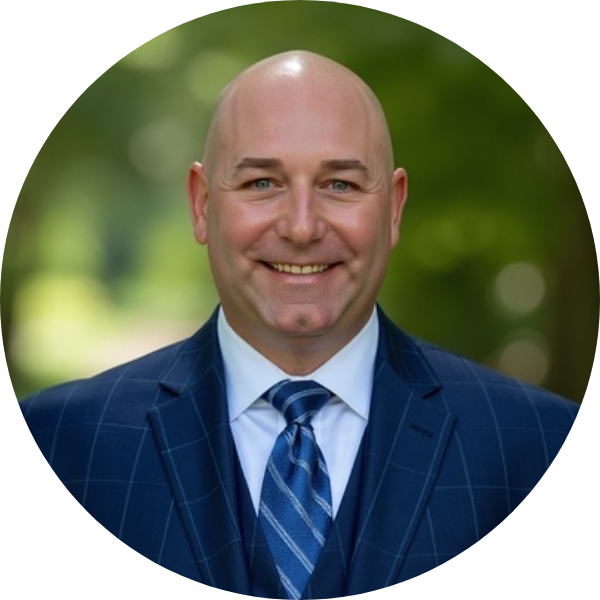
Brent Williams is the Founder and CEO of Benekiva, a technology platform transforming how insurers manage claims and policy servicing. A longtime advocate for modernization in life and annuity insurance, Brent speaks frequently on digital transformation, AI readiness, and the future of the claims experience.
With more than two decades in financial services and insurance, Brent brings a unique perspective shaped by his experience as a financial advisor, entrepreneur, educator, and operator. His work centers on helping insurers modernize legacy processes while keeping a beneficiary-first mindset at the heart of the claims journey.